Why Women Need a Different Approach to Exercise in Perimenopause & Menopause
For years, women were told that more cardio, more intensity, and more discipline were the answers to staying fit. But as many women enter their 40s and 50s, that approach often stops working—and can even make symptoms worse.
Hormonal changes during perimenopause and menopause affect how the body responds to exercise, stress, food, and recovery. This is why many women feel exhausted, inflamed, stuck with stubborn weight, or burned out despite “doing all the right things.”
The solution isn’t less movement—it’s smarter movement.
Why Strength Training Becomes Essential for Women 40+
As estrogen declines, women naturally lose muscle mass at a faster rate. Muscle isn’t just about strength or appearance—it plays a key role in metabolism, blood sugar balance, bone density, and hormone signaling.
Strength training helps:
Preserve lean muscle
Support insulin sensitivity
Protect bone health
Improve posture, balance, and confidence
This is why lifting weights becomes one of the most powerful tools for long-term wellness as we age.(1)

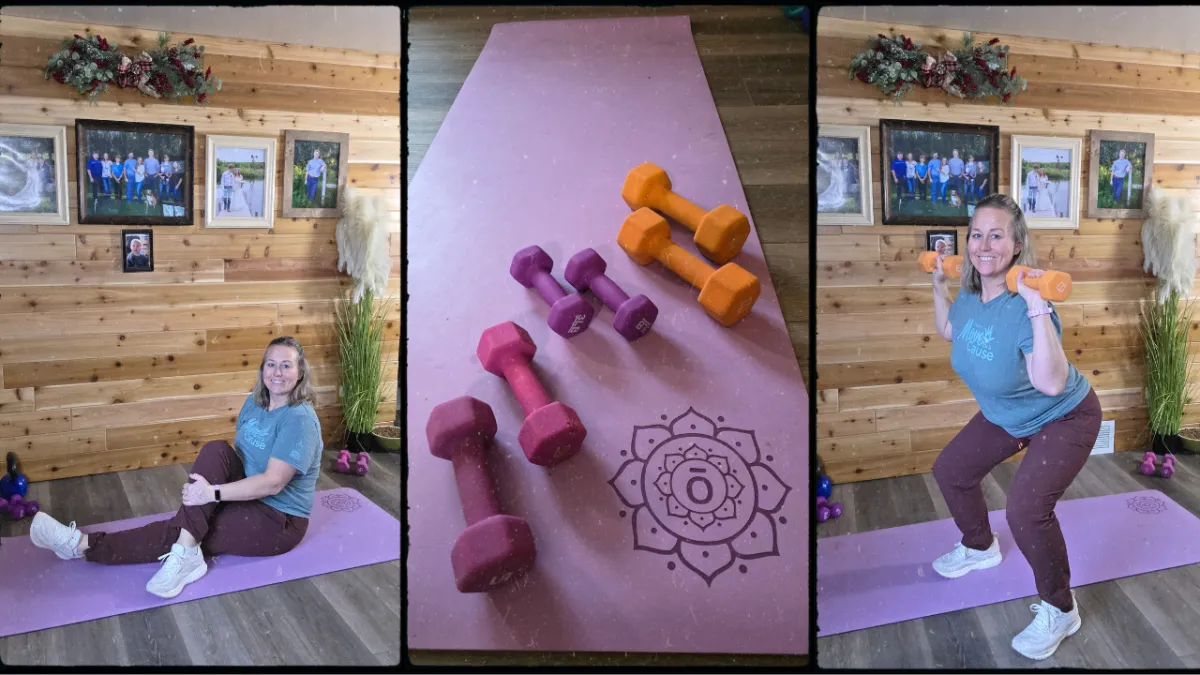
I have created 30 workouts by Phase. 20 low impact with weights & 9 yoga stretching videos.
20 Minutes or less
Want to learn more... Click here to see our workout program!
Why “One-Size-Fits-All” Workouts Stop Working
Hormones don’t stay the same throughout the month—and neither should your workouts.
Energy, recovery, cortisol tolerance, and muscle-building capacity shift as estrogen and progesterone rise and fall. When women push high-intensity workouts every day or ignore recovery phases, the body often responds with:
Elevated cortisol
Increased belly fat
Sleep disruption
Fatigue and burnout
This is where working out by phase becomes a game-changer.
Where are your hormones at? Take our Hormone Assessment!
How Our 30-Day Workout by Phase Program Works
Instead of repeating the same workouts all month, this program matches movement to the body’s natural hormonal rhythm.
Each phase has a clear purpose:
🔥 Power Phase I (Days 1–10)
Focused on strength-building and confidence using beginner-friendly weight training. This is when the body responds best to building muscle and improving insulin sensitivity.
✨ Manifestation Phase (Days 11–15)
Workouts shift into combo movements that blend strength and endurance. These sessions feel more fluid and empowering, matching peak energy and coordination.
🌿 Power Phase II (Days 16–19)
Movement becomes more grounded, combining low-impact HIIT with yoga and slower strength to support detox, recovery, and rising cortisol sensitivity.
🌙 Nurture Phase (Days 20–30)
Gentle movement like walking, stretching, yoga, and breathwork supports progesterone, the nervous system, and deep recovery.
This approach allows women to stay consistent with movement without overtraining.

Where Cardio and Yoga Fit In
Cardio and yoga still matter—but they work best when used intentionally.
Cardio
Walking and low-impact intervals support heart health and circulation. However, excessive high-intensity cardio during hormone transitions can increase cortisol and stall progress.(2)
Yoga
Yoga plays a vital role in nervous system regulation, flexibility, and stress reduction. In this program, yoga is layered strategically—especially in Power Phase II and Nurture—to support detox and recovery.(3)
Yoga alone, however, does not provide enough stimulus to maintain muscle and bone density—this is why it’s paired with strength training, not used as a replacement.
Why This Approach Feels Different
This isn’t about pushing harder—it’s about listening better.
By rotating intensity, honoring recovery, and supporting hormones instead of fighting them, women often experience:
More energy
Better sleep
Improved strength and tone
Less inflammation and burnout
Greater consistency with movement
Final Thoughts
Your body isn’t failing you—it’s asking for a new strategy.
The 30-Day Workout by Phase program was created to help women move with their hormones, build strength safely, and feel supported through every stage of midlife. When exercise works with your body instead of against it, wellness becomes sustainable—and empowering.
Click here to join our mini challange to see if this is right for you?
Or join our 30 Day Challenge Group!

(1) Source:
Harvard Health – Strength training and aging
https://www.health.harvard.edu/staying-healthy/strength-training-builds-more-than-muscles
(2)Source:
Harvard Health – Exercise and stress
https://www.health.harvard.edu/staying-healthy/exercising-to-relax
(3) Source:
Harvard Health – Yoga benefits
https://www.health.harvard.edu/staying-healthy/yoga-for-better-health
